

May 2026
Version 3.33.0
Released on May 21st, 2026
✨ New Feature & Enhancements
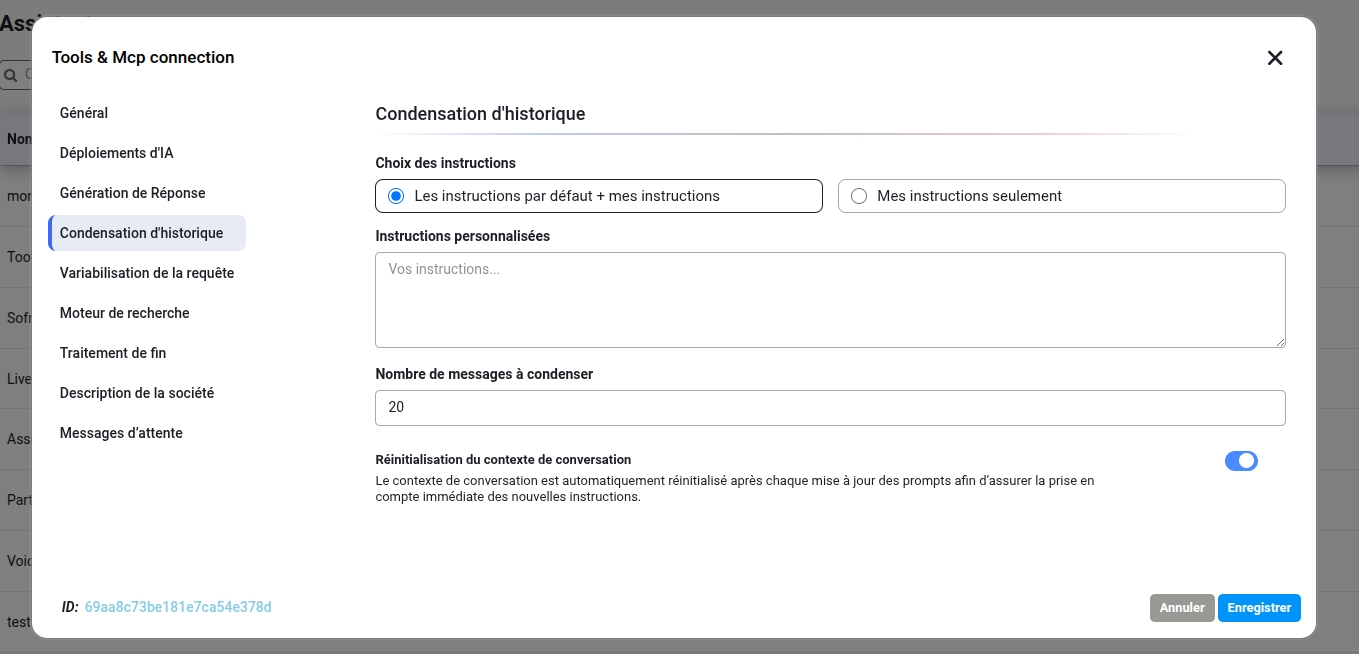
1. New: Automatic Conversation Context Reset on Prompt Update
Addition of a new toggle in the History Condensation (Condensation d'historique) settings: "Reset conversation context". When enabled, the conversation history is automatically cleared for all active users following any update to the system prompts or instructions. This feature ensures that new behavioral guidelines or technical instructions are taken into account immediately, preventing the AI from relying on legacy context stored before the modification.
2. Improved: Dedicated Translation Settings Tab
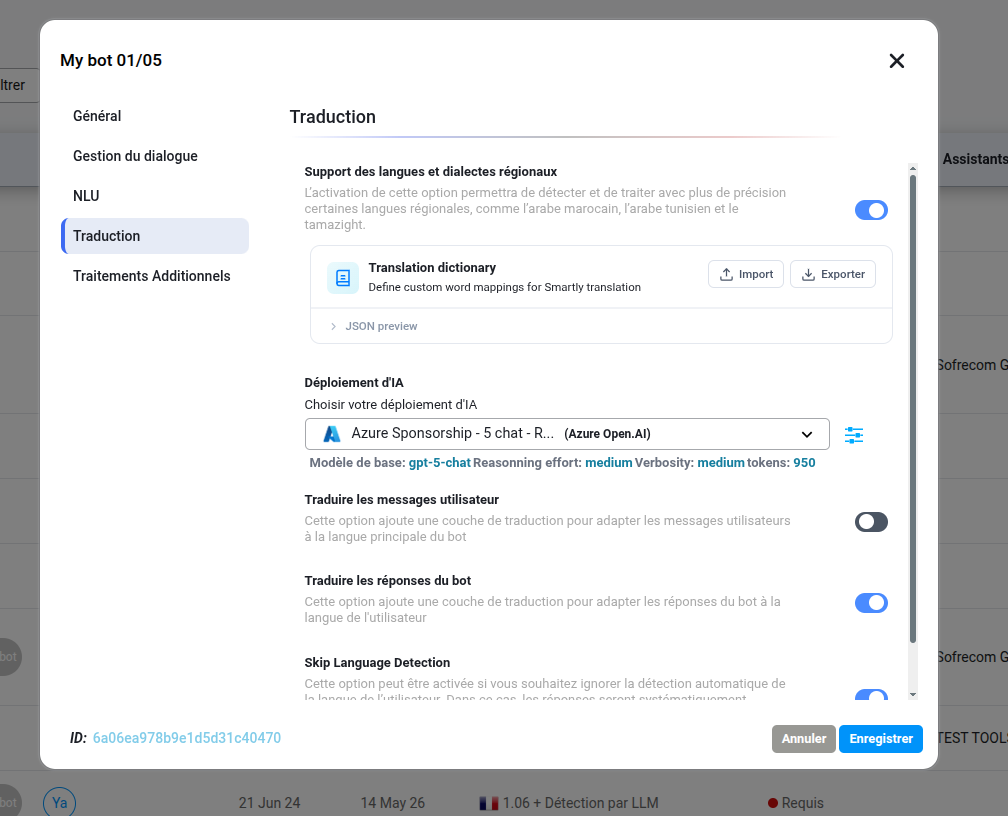
The translation configuration has been moved from "Additional Processings" to its own dedicated "Traduction" tab within the bot settings. This reorganization simplifies access and allows for a more granular setup of the translation engine.
3. New: Custom Translation Dictionary (JSON Support)
Introduction of a Translation Dictionary feature to ensure the highest accuracy for specific terminology.
-
Regional Dialects Support: Leverages Smartly’s specialized LLMs to improve detection and translation accuracy for Moroccan Arabic (Darija), Tunisian Arabic, and Tamazight.
-
Custom Mappings: Define specific word-for-word translations to override the default AI output.
-
Import/Export: Ability to upload or download the dictionary in JSON format, facilitating the management of large glossaries across different bots.
-
Live Preview: Integrated JSON viewer to verify mappings directly within the interface.
4. New: Voice-to-Human Handover with Context Continuity
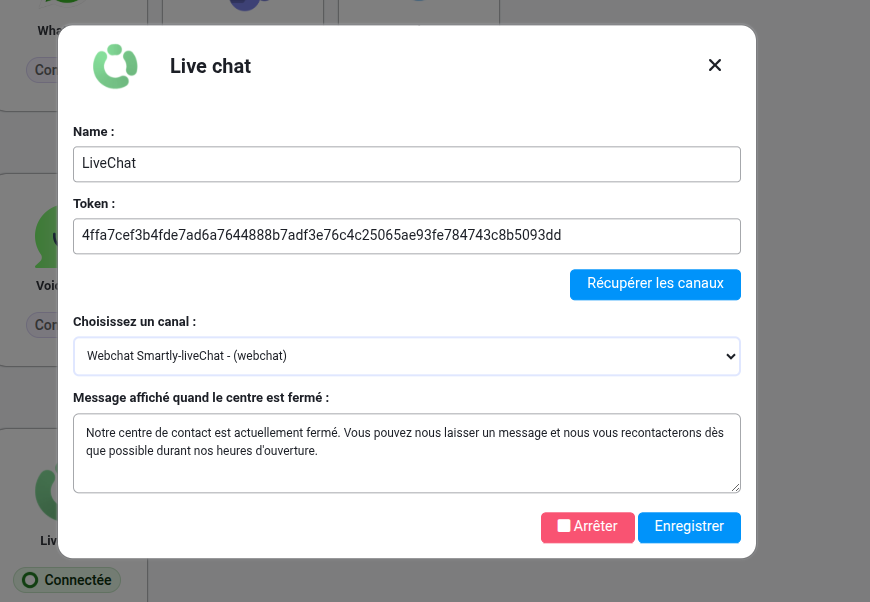
Implementation of a seamless handover mechanism for Callbots and Webchat Voice. When an escalation to a human agent is triggered, the system now automatically transmits all customer metadata and session history to Smartly Livechat. This ensures full context continuity, allowing agents to resume vocal conversations without losing previous information.
5. New: STT (Speech-to-Text) Dictate Mode for Webchat
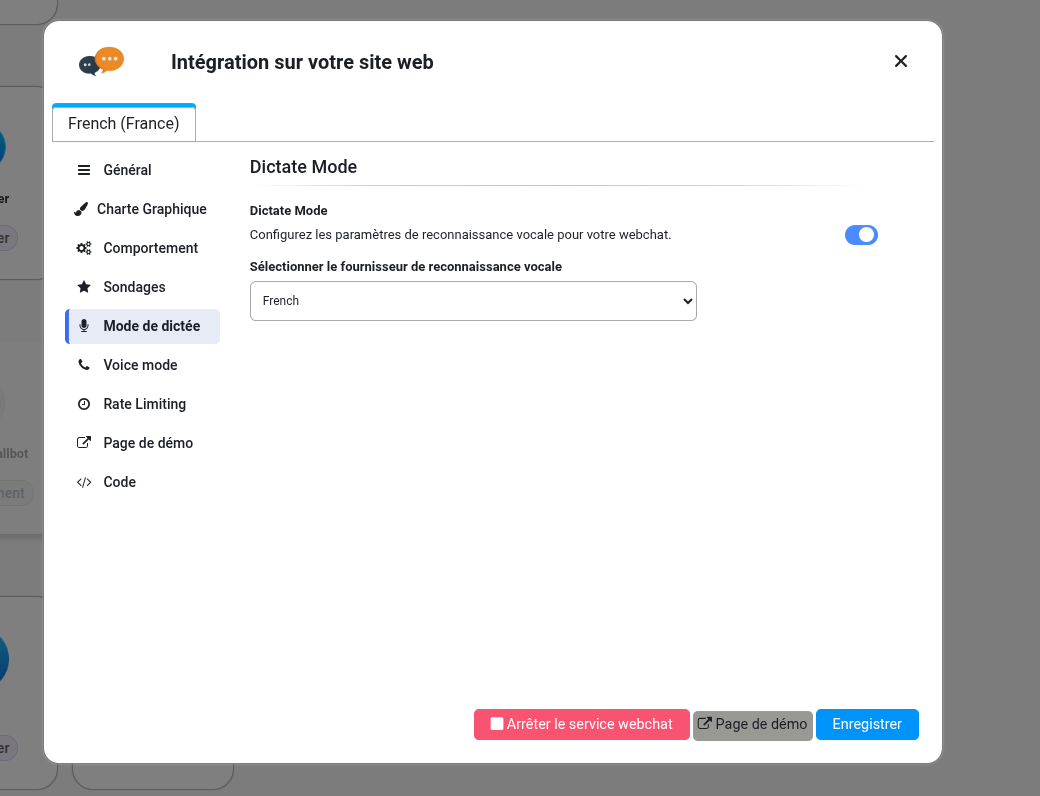
Introduction of a dedicated Dictate Mode configuration within the Webchat integration. This feature allows users to interact with the bot using their voice, which is then transcribed into text in real-time.
- STT Provider Selector: Integration of a backend and UI selector to choose the preferred speech recognition provider (e.g., Google API, Darija STT).
- Schema Synchronization: The integration JSON schema has been updated to include the dictateMode object (is_active, selected_stt, available_stt), ensuring consistent behavior across the web widget.
6. New: Unified Authentication & Livechat Integration in SmartlyAgent
Implementation of a centralized authentication system and integrated Livechat capabilities within the SmartlyAgent module. This update provides a more cohesive workspace, allowing for smoother transitions between AI-driven interactions and human agent interventions.
7. New: Unified SSO (Single Sign-On) Architecture across Smartly Apps
Deployment of a centralized authentication infrastructure to provide a seamless Single Sign-On (SSO) experience across the entire Smartly.ai ecosystem.
-
Centralized Auth Service: All applications (livechat, kyc, credapp, kanban) now rely on a unified service (auth.smartly.ai) for identity management.
-
Shared Session Management: Implementation of a shared Redis layer to synchronize user sessions across different sub-domains, eliminating the need for multiple logins.
-
Consolidated Identity Store: Migration to a unified MongoDB database for users and organizations, ensuring data consistency across all platform modules.
-
Improved Security Flow: Standardized redirection and "Set-Cookie" logic to ensure secure and efficient browser-to-server communication.
8. Enhanced: Granular Channel-Based Intervention Management
Refactoring of the Livechat intervention engine to support channel-centric workflows, removing the requirement for agents to be direct bot collaborators. This update introduces a standardized lifecycle for human interventions with granular controls:
-
Lifecycle Actions: Implementation of explicit states for interventions: Open, Watch (monitoring), Send-message, and Close.
-
Ownership Transfer: Addition of the transferInterventionOwnership capability, allowing agents to seamlessly pass active conversations to other team members.
-
Real-time Synchronization: Optimization of message routing between the Webchat and dedicated intervention rooms, ensuring continuous data flow during active human-to-user sessions.
📊 Observability & Debugging
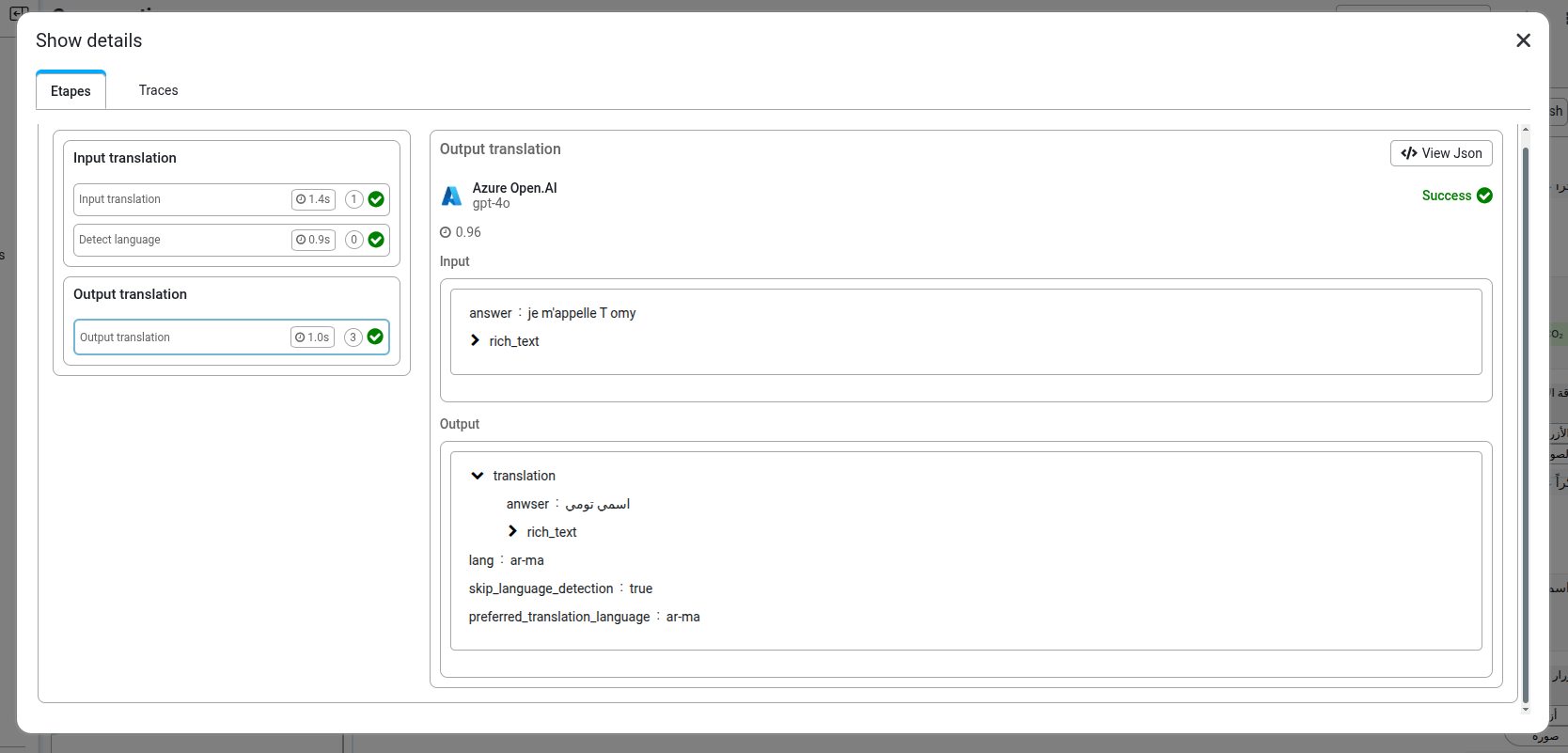
Enhanced: Detailed Translation Metadata in Conversation Logs
Improvement of the "Show details" modal within the Conversations module to provide full technical transparency:
Language Markers: Explicit display of detected language (lang) and target language (preferred_language).
Object Normalization: Fixed a rendering issue where Rich Message objects (buttons, carousels) appeared with non-compliant data formats in the logs. They are now correctly processed and displayed.
Detection Logic: Visibility of the skip_language_detection status to assist in debugging translation decisions.
🛡️ Platform & Engine Reliability
- Improved: Platform Interconnectivity & Security Hardening
Optimization of the communication protocols between the dialogue engine, the management dashboard, and the livechat service. This improvement includes the securing of several API endpoints to enhance overall platform stability and prevent unauthorized access.
🐞 Bug Fixes
- Fixed: Bot Muting Issues After Human Escalation
Resolution of a bug where the bot would remain incorrectly in "mute" mode after a human escalation had ended. This fix addresses a conflict in Node.js script execution that prevented the bot from resuming RAG-based (Knowledge Base) responses following the transition back to the AI.
Version 3.32.2
Released on May 6th, 2026
✨ New Feature & Enhancements
- New: Automatic Webchat Expansion on Mobile & Tablet
Addition of a configuration allowing the Webchat window to open automatically upon page load when accessed from mobile or tablet devices. This enhancement ensures immediate visibility of the conversational assistant for users on touch-screen devices.
- Improved: Extended Character Limits for Rich Cards (RCS Compatibility)
Increase of character limits for titles and subtitles within the Rich Card (Carousel) creation interface. This update aligns with new Google RCS specifications, allowing for significantly longer text and more detailed descriptions. The previous 80-character restriction has been extended to provide better flexibility for complex messaging needs.
🐞 Bug Fixes
- Fixed: Special Character Encoding in Email Subjects
Resolution of an encoding issue within the smartly-mail module. Special characters and accents used in email subject lines are now correctly processed, ensuring clear and readable text for recipients across all email clients.
- Fixed: Package Import Issues in Lambda Functions
Resolution of a technical issue where standard Node.js libraries, such as axios and request, were incorrectly imported within the Lambda function service. This fix resolves errors like request.Request is not a constructor and axios.get is not a function.